Is “Food Addiction” Real? A Non-Diet Dietitian Answers
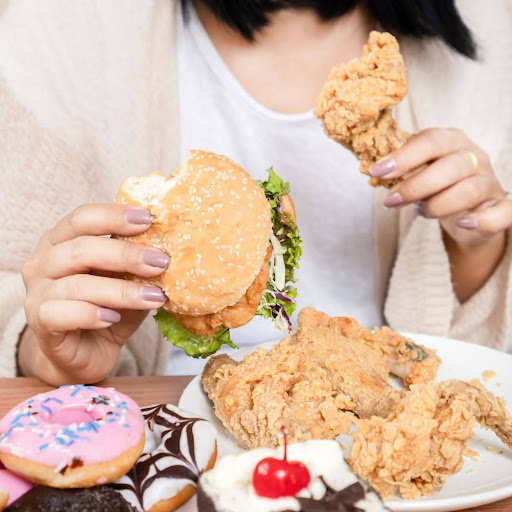
Have you ever felt “out of control” around food and wondered if you’re addicted to it? Maybe you’ve googled “food addiction” after a late-night snack spiral, or felt ashamed for craving sweets when you’re “trying to be good.”
If that’s you, take a deep breath. You’re not alone, and you’re not broken. In fact, many of the eating behaviors labeled as “addiction” are often rooted in something else entirely: restriction, shame, and a complicated relationship with food. As a non-diet dietitian, I’m here to gently challenge the narrative around “food addiction,” break down the science (and myths), and offer a more compassionate explanation without making you feel like food is the enemy.
What is “Food Addiction?”
The term “food addiction” gets thrown around a lot, especially by diet culture. But what does it actually mean? Well…it’s complicated. Unlike substance use disorders, there’s no official clinical diagnosis for food addiction. That means no standardized criteria, no consensus in the scientific community, and (importantly) no agreement on whether food itself can even be addictive in the way drugs or alcohol are addictive.
My thoughts? You can’t be addicted to something your body needs to stay alive. Food is essential (not optional) and feeling out of control around it often stems from restriction, not addiction.
Most of the time, when people talk about being “addicted” to food, they’re describing experiences like:
- Feeling out of control around certain foods
- Intense cravings, especially for highly palatable foods (think cookies, chips, pizza, ice cream)
- Eating in secret or eating past fullness
- Guilt or shame after eating certain foods
These experiences are very, very real and distressing but labeling them as an “addiction” may not be the full story.
Some researchers suggest that what’s really happening is a complex interplay between the brain’s reward system and food restriction. The theory of food “addiction” proposes that highly processed foods (those high in sugar, salt, and fat) can light up the brain’s reward center similarly to drugs, leading to repeated cravings and overconsumption. This has led to a newer term in research: Ultra-Processed Food Addiction (UPFA), which focuses on the idea that specific substances in ultra-processed foods are to blame.
However, the science behind UPFA is still evolving, and there’s no clear evidence pinpointing a single ingredient (or group of foods) that universally triggers this kind of compulsive response. And unlike drugs or alcohol, we need food to survive…so we can’t just “quit” food.
So is food addiction real? The short answer: there’s no strong consensus. But the feelings of being addicted are valid, and they deserve care, compassion, and curiosity.
Food “Addiction” vs. Alcohol and Drug Addiction
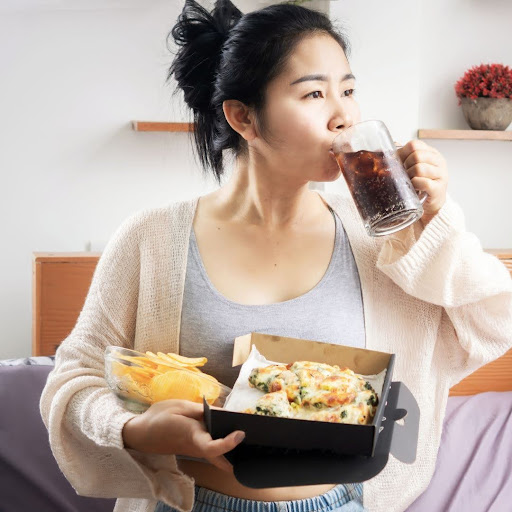
When people describe feeling “addicted” to food, it’s often based on the idea that certain foods light up the brain’s reward system, just like drugs or alcohol. And while it’s true that eating can activate dopamine responses, so can laughing, snuggling with your pet, or listening to your favorite song. That doesn’t make those things addictive. That’s our brain’s reward system at work.
True drug or alcohol addiction (Substance Use Disorder) causes long-term changes in the brain and serious physical withdrawal symptoms when the substance is removed. With food, we don’t see the same evidence. In fact, when researchers gave animals constant access to sugar (along with enough food and water), they didn’t binge or act addicted. The only time they acted compulsively was when the sugar was restricted. That’s a big clue: It might not be the food itself, but the cycle of deprivation and guilt around eating that drives the out-of-control feeling. Let’s talk about this more in the next section.
How Restriction Fuels “Addictive” Eating Behaviors
More often than not, what looks like “food addiction” is actually your body’s normal and biological response to restriction. Whether you’re skipping meals, cutting calories, or just labeling foods as “bad,” your body doesn’t see this as a lifestyle, it sees it as a threat.
So, it responds in the same way it would during a famine: by ramping up your hunger hormones, slowing your metabolism, and making you think about food 24/7. This is not a sign of addiction, it’s a survival response. And when you finally allow yourself to eat, you might swing to the other extreme, eating quickly or past fullness.
But that doesn’t mean you’re a failure like diet culture may tell you, it’s your brain trying to protect you from future deprivation and literally helping you to survive! What makes this even more complex is that your brain can’t tell the difference between physical and mental restriction.
So even if you let yourself eat the cookie, if your inner voice is saying “I shouldn’t be eating this,” or “I’ll make up for this tomorrow,” your brain still senses restriction and activates those same famine-response mechanisms. Over time, this restriction-binge-shame cycle can feel a lot like addiction, but it’s actually a predictable pattern of deprivation. And unfortunately, this cycle is what often leads people down the path of chronic dieting and, for some, into disordered eating or eating disorders.

Frequently Asked Questions
Is food addiction real?
While it can feel like you’re addicted to food, most research shows that these behaviors are actually your body’s response to restriction, not evidence of true addiction.
If I stop restricting, won’t I just overeat all the time?
At first, you might eat more of previously off-limits foods, but over time, your body begins to trust that food is available and cravings naturally stabilize.
How can I start feeling more in control around food?
Start by giving yourself unconditional permission to eat and tuning into your body’s natural hunger and fullness cues. If you’re ready for step-by-step support, check out my Intuitive Eating Self-Paced Course designed to help you break free from the binge-restrict cycle and rebuild trust with food at your own pace.
We Are Here For You
If you’ve ever felt ashamed, confused, or out of control around food, please know you’re not alone and you’re not broken. What you’re experiencing is valid, and it’s often a natural response to years of dieting, restriction, and mixed messages about food. Healing your relationship with food is possible, and you don’t have to figure it out alone.
Click the button below to book your free discovery call, let’s talk about how I can support you in finding peace with food and building trust in your body again.